
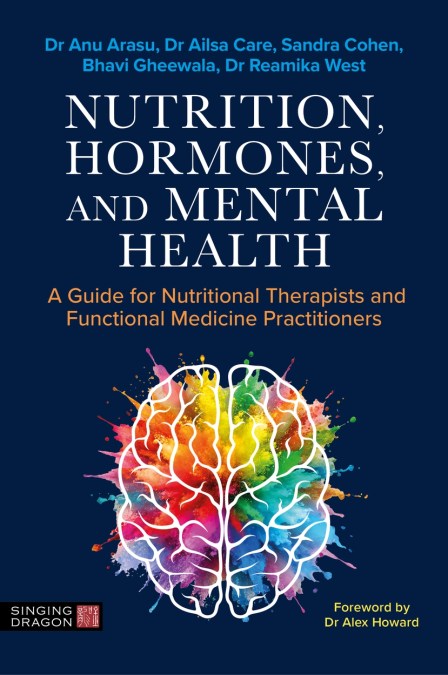
This trailblazing resource bridges the divides between nutrition, dietary patterns, hormones, and psychological wellbeing. It’s interdisciplinary and integrated approach to human health provides a more holistic understanding on how to achieve systemic balance.
Based on extensive clinical research and experience, this book has been co-authored by London Bioidentical Hormones multidisciplinary team of experts, Dr Anu Arasu, Dr Ailsa Care, Sandra Cohen, Bhavi Gheewala and Dr Reamika West. It weaves together multiple critical concepts such as the gut-brain axis, mitochondrial function and unresolved trauma, providing a 360 degree approach that allows clinicians to develop an intricate and personalised approach to client care. Each chapter is clearly structured into three sections: the problem, the feeling of what happens, and the solution, providing an accessible and methodological framework.
Based on extensive clinical research and experience, this book has been co-authored by London Bioidentical Hormones multidisciplinary team of experts, Dr Anu Arasu, Dr Ailsa Care, Sandra Cohen, Bhavi Gheewala and Dr Reamika West. It weaves together multiple critical concepts such as the gut-brain axis, mitochondrial function and unresolved trauma, providing a 360 degree approach that allows clinicians to develop an intricate and personalised approach to client care. Each chapter is clearly structured into three sections: the problem, the feeling of what happens, and the solution, providing an accessible and methodological framework.
Reviews
Nutrition, Hormones, and Mental Health provides a thoughtful and clinically relevant exploration of how diet, gut health, circadian rhythms, detoxification, and nervous system regulation intersect to influence mental well-being. The authors translate complex physiological concepts into practical insights that nutritional therapists and functional medicine practitioners can apply in real-world settings. This book highlights an important truth: mental health does not exist in isolation but is deeply connected to the body's biological systems and daily lifestyle patterns. It is a valuable resource for clinicians seeking integrative approaches that support both metabolic and emotional resilience.
A clear and compelling reminder that mental health is deeply rooted in physiology. This book explores how nutrition, metabolism, hormones, and the nervous system shape mood and resilience, offering an integrated and hopeful approach to better outcomes.
Rarely do I find a book so aligned with my own work as a functional medicine and narrative medicine practitioner. The authors honor the therapeutic relationship, root cause methodology, and a systems based approach-holding biology and biography together without reducing either. Required reading for anyone working with complex clients who needs the reminder that the narrow approach seldom leads to the outcomes we want. A single cause, however well-researched, is almost always true, but partial. Rigorous and deeply human. I'll be recommending this book for a long time.